Principles, Outcomes, and Objectivity: Political News in an Age of Contested Truth
News as it relates to politics blurs moral frameworks such as principles and outcomes, and the objectivity debate repeats the same confusion. Drawing on the news of September 23, 2026, this essay proposes a way forward: objectivity as a clarified and disclosed method.
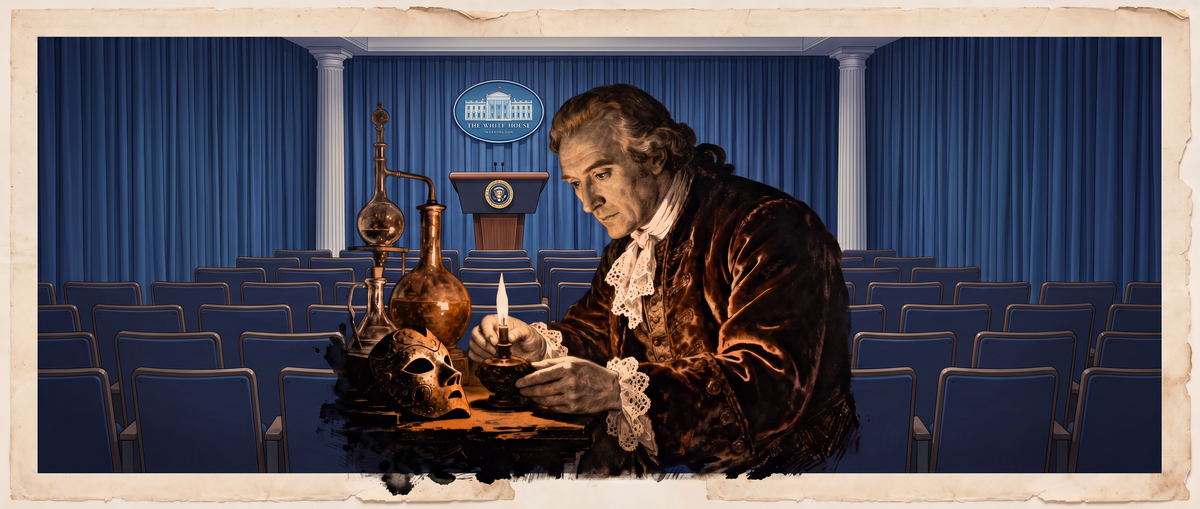
Nearly every political argument contains implicit but largely unarticulated moral arguments, and most take one of two forms. Deontological arguments hold that an action is right or wrong in itself because it honors or violates a right, a duty, a law, or a principle. Consequentialist arguments hold that an action is right or wrong because of what it produces: safety, prosperity, suffering, or stability. Both are legitimate ethical frameworks with long traditions, and neither has a natural claim to be the moral one. They simply ask different questions from different presumptions. The first asks whether an action is right; the second asks whether it works. Because they ask different questions, they rarely reach the same answer, and those who reason within one framework often cannot understand why those reasoning within the other disagree.
Political news sits in the middle of this divide, and it does a poor job of explaining it. Coverage reports arguments as "positions" or "sides" without telling readers which framework is in use, so disagreements about moral frameworks are routinely mistaken for disputes about facts or about character. That problem is old, but three features of the present moment have made it worse: the press is increasingly a participant in the fights it covers, political actors now reach the public without passing through the press, and the meaning of journalistic objectivity is itself in dispute. This essay argues that these are not separate problems. The confusion of moral frameworks in political news and the crisis of objectivity in journalism are the same problem seen from two sides, and they call for the same remedy: an objectivity grounded not in neutrality but in disclosed method.
How political coverage confuses the frameworks
The basic confusion is visible in a single day's news. On September 23, 2026, two leading stories showed the same government reasoning in different frameworks. On Iran, the administration argued largely from outcomes. The White House framed the President's UN address around the idea that while others talked, he acted, and at the General Assembly the President described his choice as striking a deal to end the war or annihilating the Islamic Republic. Critics often answered from limits on the use of force, arguing that some threats and some means are wrong regardless of what they achieve. On the White House ban of three news outlets, the frameworks reversed. The Justice Department contended that the outlets' access to the White House is a privilege rather than a right, a claim about executive prerogative, while the outlets argued a constitutional principle against viewpoint discrimination and also made an outcome claim, their attorney saying the ban harms Americans who are entitled to rigorous, fact-based coverage of the president.
Coverage reported each argument, but it did not name the frameworks, and the switching went unnoted. Viewers see clashes in which the two sides are often answering different questions, and they are confused. And because each story was covered in isolation, readers don't see the larger pattern: political actors tend to argue from principle when principle favors them and from outcomes when outcomes do. A reader who sees only one issue at a time concludes that their own side is consistent and the other side is not, and they align based on their own deontological or consequentialist tendencies on any given issue.
The political coverage imports its own ethical frameworks. A headline that leads with what a policy costs invites a consequentialist verdict; one that leads with what it violates invites a deontological one. The same event can be reported accurately either way, yet the reader is steered toward a different kind of judgment. Political journalism also has a strong habit of treating politics itself in consequentialist terms, asking who is winning and how a decision will play with voters. When the President said he did not expect an Iran agreement before the midterm elections, coverage that treated a war decision through its electoral effects turned the question "is this right?" into "how will this play?" That framing can crowd out moral argument of both kinds. Finally, news organizations face consequentialist pressures of their own, including audience, engagement, and revenue, which reward conflict-driven framing over careful distinctions.

When the press becomes a party
The press-ban story reveals a newer problem: journalism is no longer only the medium through which political arguments travel. Sometimes it is a party to them. The President announced the ban on social media, saying he objected to the outlets' coverage, and the next day Secret Service personnel collected the reporters' hard passes. The outlets reporting on the ban included the banned outlets themselves. Members of the White House television pool declined to cover the President ahead of his trip in response to the action against CNN, and PBS announced it would not publish administration-provided video or images in objection to the ban.
From journalism's perspective, these were acts of professional duty in defense of press freedom, a deontological commitment. From the administration's perspective, and that of many of its supporters, they looked like coordinated partisan action. This is the same framework clash found everywhere else in politics, now with the press inside it. The press cannot be neutral about its own freedom to report, but neither can it expect readers who distrust it to accept its account of a dispute in which it has a direct stake.
When politics bypasses the press
At the same time, the press no longer controls how political arguments reach the public. Days after barring reporters from the three outlets, the administration launched a round-the-clock YouTube channel to gather its biggest moments in one place, and political actors across the spectrum now speak directly to audiences through social platforms and aligned media. In that fragmented environment, each audience receives arguments already framed in the moral vocabulary it prefers. The framework confusion is no longer only a failure of reporting; it is a feature of the entire information system. Journalism can no longer claim authority by virtue of being the gatekeeper. It has to earn attention and trust by offering something the direct channels do not.
The problem of objectivity
This is where the objectivity debate enters, and why it has stalled. It is usually staged as a choice between two positions. One says journalists should be neutral, give every side a fair hearing, and keep their own views out. The other says neutrality is a myth that produces false balance, and that journalists should pursue accuracy and moral clarity even when it means siding against one party's claims. Given everything above, that framing is too simple, because "objectivity" does too many jobs at once.
When Walter Lippmann and others promoted objectivity in the early twentieth century, they meant a discipline of method: journalists, knowing they were biased, should adopt verification practices the way scientists do. Over the decades, that idea drifted into a posture of neutrality and balance, sometimes called the "view from nowhere." The journalist became objective not by testing claims but by standing equidistant between them. That drift merged three distinct things: accuracy of fact, meaning whether a claim is true, false, or unverifiable; neutrality of stance, meaning whether the journalist takes a side; and balance of voices, meaning whether each side gets comparable space. These can come apart. A story can be balanced and inaccurate, giving equal space to a true claim and a false one. It can be accurate and non-neutral, as when verification consistently cuts against one party. Much of the fight over objectivity is people defending one of these meanings while their opponents attack another.
The moral frameworks complicate the picture further. Facts can be verified, but frameworks cannot. No amount of reporting settles whether a policy should be judged by its principles or its results. Traditional objectivity never had a clear answer for this, so it tended either to treat moral arguments as mere opinion beyond scrutiny, or to let the journalist's own framework slip in through word choice and emphasis, exactly the unnamed framing described above.
The objectivity debate also reproduces the very framework clash it is meant to referee. Defenders of neutrality often argue deontologically: fairness to all parties is a duty owed regardless of results. Critics often argue consequentially: false balance misleads the public and empowers falsehood, so neutrality causes harm. Each side hears the other as either unprincipled or indifferent to outcomes. The same day's news shows the tension. Fact-checkers rated false the President's UN claim that strikes on drug boats had destroyed nearly all drugs arriving by sea, noting that because the trade is a black market, the true figure is unknowable.
To some readers that is objectivity working as it should; to others it is evidence of selective scrutiny. The fact-check alone cannot settle which reading is right, because the dispute is not only about the fact but about whether the press applies its standards evenly.
A way forward: objectivity as disclosed method
The most workable answer is neither to abandon objectivity nor to restore neutrality, but to separate its meanings and treat each honestly. Call it objectivity as disclosed method. It answers each of the problems described above, and it has five elements.
First, journalism should be objective about facts and show its work. Verification should be rigorous and applied to every party by the same standard, but rather than simply asserting that a claim is false, coverage should show how the judgment was reached: which sources were checked, what is established, and what remains unknown. This responds directly to the bypass problem. When the press is no longer the gatekeeper, its authority cannot rest on its name; it must rest on a method readers can inspect for themselves.
Second, coverage should label the three layers of every political claim. Most political arguments combine facts about what happened, predictions about what will happen, and values about what should matter. Facts can be verified; predictions can be assessed against evidence and track records; values can only be described fairly. Much of the framework confusion comes from treating contested predictions as facts or moral judgments as factual errors. The Iran story is a clear case: whether maximal threats will produce a deal is a prediction, whether the threats are permissible is a moral question, and coverage serves readers best when it keeps those apart.
Third, journalism should be neutral between moral frameworks and translate between them. On contested policy questions, coverage should not privilege principle-based or outcome-based reasoning. It should name which framework each side is using and, where possible, state each side's case in the terms its own advocates would accept, showing a principle-minded reader the strongest outcome-based case, and the reverse. This directly answers the problem this essay began with: the tendency of each side to see the other as acting in bad faith when it is acting morally in a different way.
Fourth, journalism should declare the commitments it cannot be neutral about. It cannot be neutral about truth-telling, verification, or the freedom to report, because those are the preconditions of doing journalism at all. Pretending otherwise is dishonest. The honest course is to state these commitments openly and, when an outlet is a party to a story, to disclose that stake plainly and present the opposing side's argument in its strongest form. This answers the participant problem. In the press-ban dispute, readers who distrust the banned outlets deserve to see the administration's case stated fully and fairly, and to be told clearly that the reporters describing the dispute are also its subjects.
Fifth, journalism should apply a symmetry test. The danger of the fourth element is that defending press freedom or defending truth can become cover for partisanship. The safeguard is consistency: would we cover this the same way if the parties were reversed? Would we defend an outlet we dislike facing the same treatment? Would we apply the same scrutiny to a claim from the side we find more sympathetic? Newsrooms can audit their own coverage against these questions and publish the results. This addresses both political actors' framework-switching and the suspicion of selective scrutiny that surrounds fact-checking on any one side.
Objections and conclusion
This approach has real limits. Choosing which stories to cover remains a value judgment that no method fully neutralizes. Naming a claim's framework may itself be read as editorializing. Audiences may not reward transparency, preferring coverage that confirms what they already believe. And any newsroom's application of the symmetry test will be imperfect.
But the alternatives are worse. Pure neutrality fails when facts are clear and one side is wrong about them, and it has no answer to the moral frameworks at all. Open advocacy abandons readers who disagree and forfeits journalism's claim to be anything more than one more partisan channel, in an environment already full of them. Disclosed method offers a path between the two: rigorous about facts, fair about values, honest about its own stakes, and consistent across parties. It does not end political disagreement, and it should not try to. What it offers is the ability for citizens to see what they actually disagree about: whether a dispute turns on evidence that could settle it, or on moral frameworks that evidence alone cannot. In a political culture where each side increasingly believes the other is not merely wrong but acting in bad faith, that clarity may be the most important thing journalism has left to give.
The author, Dennis Stevens, Ed.D., is a writer, visual artist, educator, and U.S. Coast Guard veteran whose essays examine media, meaning, and democratic life in an age of factionalism and AI. He holds a doctorate from Teachers College, Columbia University, and founded the Sempergeist Institute, created the Poewell meaning-making platform, and founded HEGEMONACO, a publication on the ethics and politics of governing artificial intelligence in democratic societies.