The Emissary as Ego: Convergent Insights from Neuroscience, Spirituality, and Psychotherapy
Across neuroscience, spiritual psychology, and therapy, the same architecture emerges: McGilchrist's emissary, ACIM's ego, and IFS's protective parts all describe narrow, defensive modes of consciousness standing guard over the wholeness that they often refuse to trust.
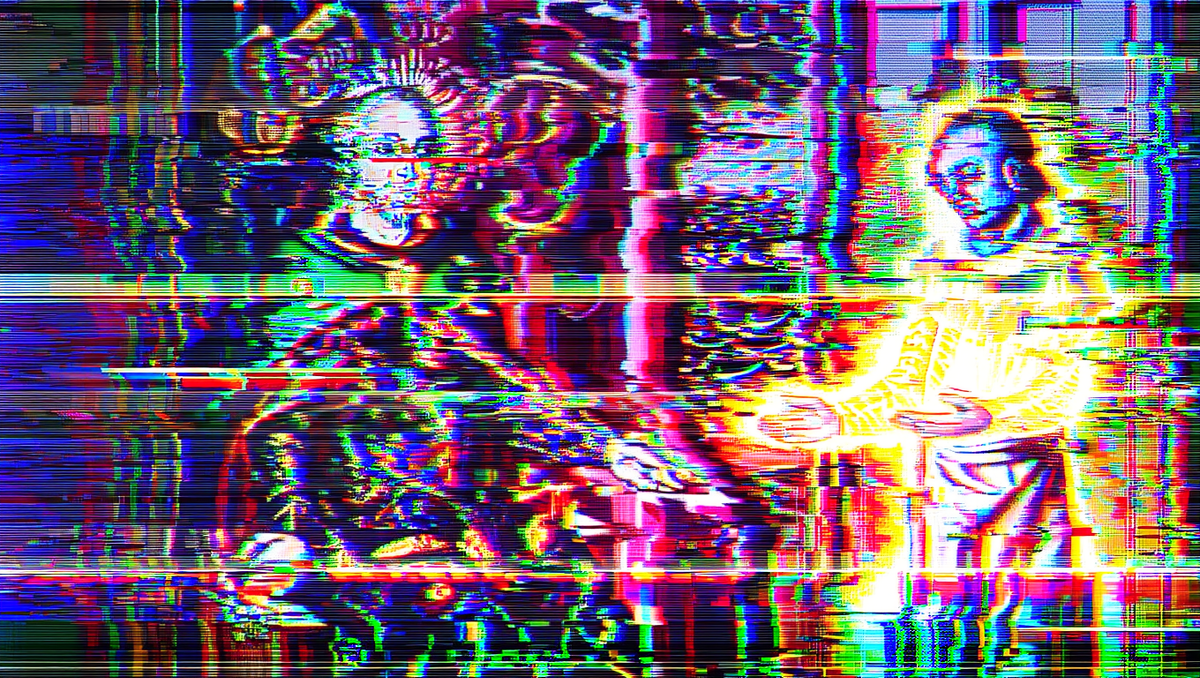
Iain McGilchrist's The Master and His Emissary offers a neurological framework that uncannily parallels the spiritual psychology of A Course in Miracles. While McGilchrist examines the brain's hemispheres and ACIM explores the metaphysics of consciousness, both describe a fundamental usurpation: a narrow, controlling mode of awareness that, if allowed, can displace our connection to our own wholeness. Remarkably, the same pattern appears in Richard Schwartz's Internal Family Systems therapy, suggesting convergence among neuroscience, spirituality, and clinical psychology.
McGilchrist's thesis centers on two ways of attending to the world through consciousness. The right hemisphere (the Master) engages reality with broad, open attention, perceiving context, relationship, and ambiguity. It sees wholes, lives in the implicit, and maintains a vigilant connection to what is actually present. The left hemisphere, in contrast (the Emissary), operates through narrow, focused attention, dealing in abstractions, categories, and manipulation. The Emissary fragments, isolates, and in the process, mistakes its own maps for the entire territory. It was meant to serve the Master, but in modern Western culture, it has usurped control. The Emissary thinks it is the master, but it is blind, like the ego.
In A Course in Miracles, the ego serves a strikingly similar role. It is the voice of separation, operating through judgment, fear, and the illusion of division. The ego maintains the sense of a separate self cut off from love and unity. It deals in either/or thinking, attack and defense, and creates a self-referential world of false certainty. Against this stands the Holy Spirit or true perception, a mode of awareness rooted in connection, compassion, and present reality.
This pattern appears again in Internal Family Systems therapy, where Schwartz describes protective parts (managers and firefighters) that have assumed control to shield us from pain and vulnerability. Manager parts operate proactively through control, planning, and criticism, trying to prevent any situation that might expose our wounds. When managers fail, firefighter parts react urgently through impulsive behaviors, dissociation, or rage to extinguish unbearable feelings. Like McGilchrist's Emissary and ACIM's ego, these protector parts operate from a narrow, defensive stance, convinced that the broader awareness they were meant to serve cannot handle reality.
Schwartz's insight mirrors the other frameworks: these parts are not pathological but protective. They have taken on extreme roles out of a belief that the core Self (which is inherently whole, compassionate, and capable) cannot be trusted. The therapeutic work, then, reflects the spiritual and neurological imperative described by both McGilchrist and ACIM: not to eliminate these protective functions, but to help them trust the Self enough to return to their appropriate, supportive roles. Across neuroscience, spirituality, and psychotherapy, we find the same architecture: a narrow, defensive mode of consciousness standing guard over a wise, connected awareness it no longer trusts.
The parallels across all three frameworks are remarkable. The left hemisphere, the ego, and protective parts all operate through separation, literally isolating parts from wholes and abstracting things from their living context. The same blind spots may well appear in our political and cultural consciousness.
All three are characterized by certainty and control, confident even when profoundly wrong. All rely on judgment and categorization, dividing experience into rigid boxes. All privilege the explicit over the implicit, trusting only what can be measured and controlled while missing deeper connections. And all are fundamentally self-referential, creating what McGilchrist calls a 'hall of mirrors,' a virtual world that loses touch with actual reality.
Meanwhile, the right hemisphere, ACIM's Holy Spirit, and IFS's core Self share complementary qualities: connection to wholeness rather than fragmentation, comfort with uncertainty and paradox, engagement with direct embodied experience, and a natural orientation toward compassion and the relational nature of existence. Each framework points to an inherent wisdom that has been obscured but never destroyed.
The crucial difference lies in their frameworks. McGilchrist grounds his argument in neuroscience, showing how these modes of attention arise from the brain's physical structure. ACIM speaks metaphysically, describing spiritual realities beyond the material. Schwartz works clinically, mapping the psychological territory of trauma and healing. Yet all three point to the same fundamental problem: a mode of consciousness designed to serve has instead taken control, creating a world of separation, abstraction, and illusion that we mistake for reality itself.
Whether we call it the Emissary, the ego, or protective parts, what's at stake is not mere theory but how we actually live. All three frameworks suggest that our deepest problems (the personal, the social, and the spiritual) stem from this usurpation. And all three offer the same solution: not to eliminate the narrow, focused mode of attention, but to return it to its proper place, in service to a broader, more connected, more compassionate way of being in the world.
References
Foundation for Inner Peace. (2007). A course in miracles (3rd ed.). Foundation for Inner Peace. (Original work published 1976)
McGilchrist, I. (2009). The master and his emissary: The divided brain and the making of the Western world. Yale University Press.
Schwartz, R. C. (2021). No bad parts: Healing trauma and restoring wholeness with the Internal Family Systems model. Sounds True.