What Journalism Cannot Answer
Journalism rests on questions its daily practice rarely confronts: what counts as a political fact, how journalists know what they know, and whether neutral description is possible. This week's news shows why we can't neglect those questions.
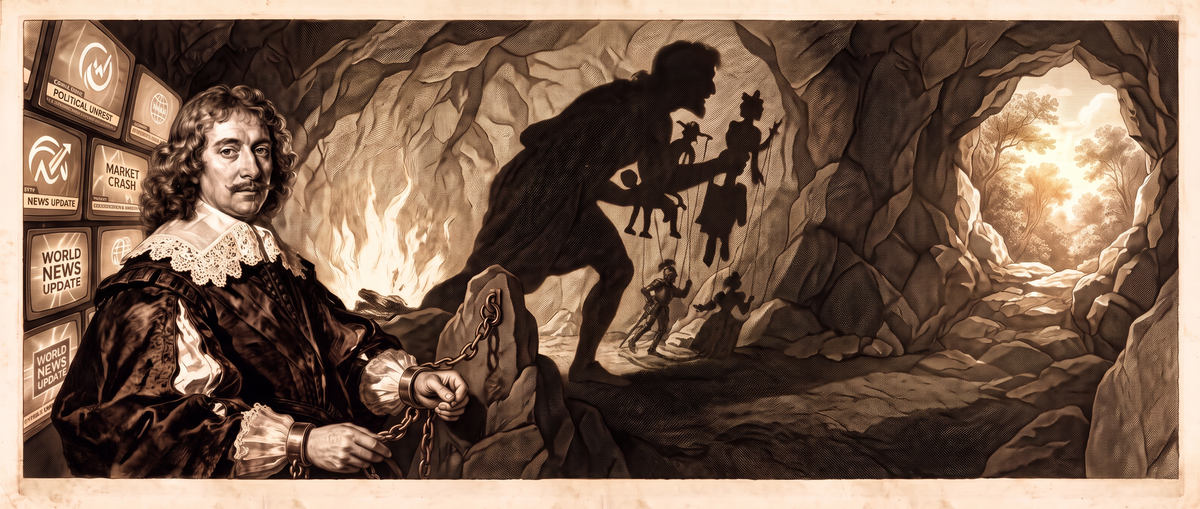
Journalism schools teach a craft; students learn to verify sources, structure a story, meet a deadline, avoid libel, and follow a code of ethics that tells them to seek truth, minimize harm, act independently, and be accountable. These are real skills, and they matter. But they rest on assumptions about what exists, how we know it, and what our words do; these are assumptions the craft cannot examine with its own tools.
This is not because no one has asked. Journalism scholars have wrestled with these questions for decades. Michael Schudson (1978) traced how objectivity became a professional ideal, Gaye Tuchman (1978) showed how newsroom routines construct what counts as news, Bill Kovach and Tom Rosenstiel (2021) recast objectivity as a discipline of verification, and Stephen J. A. Ward (2015) developed a philosophical account of "pragmatic objectivity."
What is a political fact?
Journalism works on a quiet realism: events happen, and reporters describe them. Social psychologists describe a related tendency, also called naive realism: the belief that we see the world as it is, so those who disagree must be uninformed, irrational, or biased (Ross & Ward, 1996). The hostile media effect shows it at work in news itself: partisans on opposing sides view the same coverage and each judges it biased against them (Vallone et al., 1985). Journalists are not immune; the newsroom maxim that criticism from both sides proves fairness is itself a naive-realist inference. Naming frames and contested terms can interrupt that reflex, on the page and in the newsroom.
For a fire or a flood, explaining the "world as it is" works well enough. But most political facts are not like fires. A "ban," a "war," a "privilege," "national security," even "the press" are what philosopher John Searle called institutional facts. They exist because people collectively recognize them, and they can be contested, redefined, or partly brought into being by the claims made about them.
This week offered a clear example. After the President barred reporters from CNN, MS NOW, and Politico from the White House, the administration described the move as an "access change" and argued that the First Amendment protects the outlets' right to publish but not a press pass or a seat in the briefing room. The outlets called it a ban and an assault on the First Amendment. The two sides were not disagreeing about a fact that sits independently in the world. They were contesting what kind of thing White House access is. Verification cannot settle that dispute, because it is not a dispute about evidence. It is a dispute about reality's categories, and that is the domain of ontology.
In American life, such disputes are often settled not by journalism or philosophy but by institutions. A federal judge is now weighing the outlets' challenge, and courts have addressed the question before, holding in earlier cases that a reporter's interest in a White House press pass is protected by due process. When a court rules, it does not discover what access "really" is. It fixes, at least provisionally, what access will count as. Journalism reports those rulings as facts, which they are, but it rarely tells readers that the categories themselves were decided by power and procedure rather than found in nature.
Institutional facts are still facts
None of this means that political truth is merely opinion. Searle himself drew the crucial distinction: institutional facts are subjective in their mode of existence, because they depend on human recognition, but they can be objective in how we know them. That a court issued a ruling, that an administration revoked approximately sixty press passes, that a merger was approved on stated conditions: these are verifiable facts, and anyone who denies them is simply wrong.
The point is not that everything is framing. It is that framing happens in specific, identifiable places, in the choice of categories and words, and those places can be named and examined. In a political climate where "fake news" is used as a weapon against inconvenient reporting, the answer is not to pretend journalism has no framing, nor to concede that it is nothing but framing. It is to show readers exactly where the framing is, and to hold the verifiable facts steady around it.
Does news describe events or make them?
Journalism also helps constitute what it reports. Historian Daniel Boorstin described "pseudo-events," such as press conferences and staged announcements, that exist largely to be covered. Poll coverage shapes how people vote. Coverage of a threat can change the threat. And in the press-ban dispute, the reporters describing the story are also its subjects. The reporter is never fully outside the system being described, yet the professional self-image of the neutral observer depends on imagining otherwise.
How do journalists know what they know?
Most journalistic knowledge is testimony: reporters know things because someone told them, often someone the reader cannot see. This is no longer an abstract concern. In defending the ban, the President argued that outlets writing stories based on unknown sources should not have access to the White House. Whatever one thinks of the ban, the argument strikes at journalism's weakest epistemic point: why should the public trust sources it cannot see?
Here philosophy can do more than raise the question. The philosophy of testimony has long debated when we are justified in believing what others tell us, and one widely shared answer is that trust in testimony should rest on reasons: whether the speaker is in a position to know, whether they have an interest in the outcome, whether their account has been corroborated, and whether they have been reliable before. That analysis yields a concrete standard journalism could adopt. Every story relying on an unnamed source should tell readers, as specifically as safety allows, how the source is in a position to know, what interest they might have, and what independent corroboration exists. Many newsrooms have versions of this rule. Few apply it consistently, and fewer explain to readers why it matters.
Political journalism also traffics heavily in claims about the future: whether a threat will produce a deal, whether a policy will work, whether an election will turn. Forecasters have developed methods for stating such claims as probabilities and tracking their accuracy over time, but most news copy still presents predictions with the same confidence as facts. That is an epistemological failure the craft has the tools to fix but seldom does.
Can facts and values be separated?
The ideal of objectivity assumes that facts can be reported apart from values. But philosophers, notably Hilary Putnam, argued that this distinction collapses for "thick" concepts, words that describe and judge in the same breath. Political language is full of them: "censorship," "regime," "assault on democracy," "fake news," "accountability." Choosing whether to write "ban" or "access change" is not a neutral description waiting to be labeled. It is where the framing happens.
Journalism education treats word choice as a matter of style and fairness. Philosophy recognizes it as a question about whether neutral description is possible at all. The practical answer is not to search for perfectly neutral words, which may not exist, but to acknowledge contested terms openly: to tell readers that one side calls it a ban and the other calls it an access change, and why the difference matters.
Is there a view from nowhere?
The critique of objectivity borrowed its most famous phrase from philosopher Thomas Nagel: the "view from nowhere." The practical debate asks whether journalists should adopt a neutral standpoint. The philosophical question is prior and harder: whether any such standpoint exists, or whether every account of politics is necessarily written from somewhere. Journalism's current crisis of objectivity is, at bottom, a crisis about this question, conducted without the vocabulary to name it.
Which ethics?
Journalism ethics codes are lists of duties, softened by attention to harm. They seldom acknowledge that duties and outcomes are distinct moral frameworks that often conflict, and they rarely engage traditions beyond them, such as virtue ethics, which asks what kind of character good journalism requires, or care ethics, which asks what is owed to those a story touches. A code tells journalists what to do. Only moral philosophy can explain why, and what to do when the rules collide.
Who decides the categories?
These questions are not only philosophical; ownership, regulation, and technology increasingly decide them. As a condition of approving the Skydance-Paramount merger, federal regulators required an ombudsman to monitor bias at CBS News. Now, as Paramount Skydance moves to acquire CNN, a new editorial oversight board will watch over both newsrooms. Someone in each arrangement must decide what counts as bias, independence, and fairness. Those are ontological and epistemological judgments, being made by corporate and regulatory structures rather than by journalists or philosophers, and largely out of public view.
Artificial intelligence raises the stakes further. Any AI system that labels claims, sorts facts from opinions, or detects framing must be built on a schema: categories of events, definitions of evidence, a line between description and judgment. That schema is an ontology and an epistemology, chosen by whoever builds it and applied at a scale no editor has ever had. If journalism has never examined its own foundational assumptions, it will hand them unexamined to machines, and the power to define reality's categories will pass quietly to those who write the code.
Conclusion
Journalism does not need to become philosophy. But it needs philosophy's help, and it needs to bring its own scholars' insights into the newsroom and the classroom. That means naming contested categories rather than hiding them, explaining how it knows what it reports, distinguishing prediction from fact, and holding verifiable truth steady while making framing visible. Journalism education owes its students more than a craft that works until someone asks what its words mean, what its facts are, and how it knows. In a moment when every institution's claim to truth is contested, and when courts, owners, regulators, and algorithms decide what counts as news, those are no longer academic questions. They are the questions on which the future of news depends.
For a practical framework built on these ideas, see the companion essay, Principles, Outcomes, and Objectivity: Political News in an Age of Contested Truth.
References
Kovach, B., & Rosenstiel, T. (2021). The elements of journalism: What newspeople should know and the public should expect (4th ed.). Crown.
Ross, L., & Ward, A. (1996). Naive realism in everyday life: Implications for social conflict and misunderstanding. In E. S. Reed, E. Turiel, & T. Brown (Eds.), Values and knowledge (pp. 103–135). Lawrence Erlbaum Associates.
Schudson, M. (1978). Discovering the news: A social history of American newspapers. Basic Books.
Tuchman, G. (1978). Making news: A study in the construction of reality. Free Press.
Vallone, R. P., Ross, L., & Lepper, M. R. (1985). The hostile media phenomenon: Biased perception and perceptions of media bias in coverage of the Beirut massacre. Journal of Personality and Social Psychology, 49(3), 577–585.
Ward, S. J. A. (2015). The invention of journalism ethics: The path to objectivity and beyond (2nd ed.). McGill-Queen's University Press.
The author, Dennis Stevens, Ed.D., is a writer, visual artist, educator, and U.S. Coast Guard veteran whose essays examine media, meaning, and democratic life in an age of factionalism and AI. He holds a doctorate from Teachers College, Columbia University, and founded the Sempergeist Institute, created the Poewell meaning-making platform, and founded HEGEMONACO, a publication on the ethics and politics of governing artificial intelligence in democratic societies.